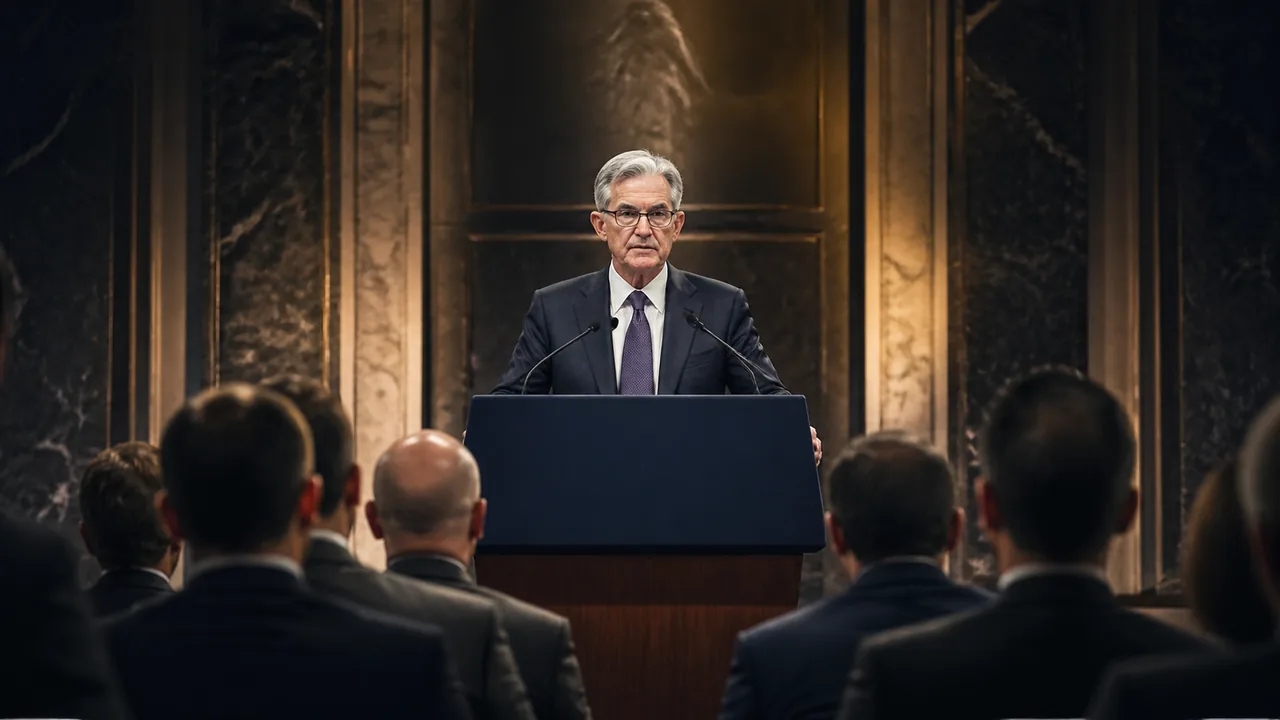
Central banks are the most powerful institutional force in currency markets. Their decisions on interest rates, money supply, and forward guidance directly affect exchange rates, often within seconds of an announcement. Understanding how this works helps forex traders and investors make sense of major currency moves.
How do interest rates affect currency values?
The most direct link between central banks and currencies runs through interest rates. When a central bank raises its benchmark rate, the return on assets denominated in that currency tends to increase. Foreign capital flows in to capture the higher yield, increasing demand for that currency and pushing its value up.
The reverse holds when rates are cut. Lower rates reduce the return on holding a currency, capital flows elsewhere, and the currency tends to weaken.
This mechanism is the basis of carry trading, where investors borrow in low-rate currencies and invest in high-rate currencies to capture the interest rate differential.
Which central banks matter most to currency traders?
The US Federal Reserve (Fed)
The Federal Open Market Committee (FOMC) sets US interest rates, meeting eight times per year. Because the US dollar is the world’s reserve currency and the dominant currency for global trade and debt, Fed decisions have a wider impact than any other central bank. When the Fed raised rates aggressively from near-zero to over 5% between 2022 and 2023, the dollar strengthened against virtually every major currency. EUR/USD fell from above 1.10 to below parity; GBP/USD fell from 1.37 to below 1.07. The ripple effects reached emerging market currencies that carry dollar-denominated debt, which weakened sharply as the cost of that debt increased in local currency terms.
The European Central Bank (ECB)
The ECB sets monetary policy for the 20 eurozone member states, with a mandate focused on price stability — defined as inflation close to but below 2%. The ECB’s governing council meets roughly every six weeks. ECB decisions primarily drive EUR pairs: EUR/USD, EUR/GBP, EUR/JPY. The ECB was notably slow to raise rates in 2022 compared to the Fed, which contributed to the euro falling to parity against the dollar. When it did begin hiking, starting in July 2022, EUR/USD saw sharp but short-lived recoveries as markets tried to price in the new trajectory.
The Bank of England (BoE)
The Bank of England’s Monetary Policy Committee meets eight times per year and sets the base rate for the UK. BoE decisions are the primary driver of GBP pairs. Alongside the rate decision itself, the quarterly Monetary Policy Report provides forecasts for inflation and growth, which shape expectations for future rate moves. The BoE also publishes minutes of each meeting, which traders analyse for language shifts indicating whether the committee is leaning hawkish (favouring hikes) or dovish (favouring cuts or holds).
The Bank of Japan (BoJ)
The Bank of Japan maintained ultra-loose monetary policy for an extended period — including negative interest rates and yield curve control — long after other major central banks began hiking. This policy divergence was one of the primary drivers of yen weakness: USD/JPY rose from around 115 in early 2022 to 150 by late 2022, as the rate differential between the dollar and the yen widened dramatically. When the BoJ began signalling a gradual shift away from ultra-loose policy in 2024, yen pairs experienced some of the sharpest moves seen in years, with USD/JPY dropping over 10 yen in a matter of weeks as carry trades unwound rapidly.
Other significant central banks
The Reserve Bank of Australia (RBA) drives AUD pairs; the Reserve Bank of New Zealand (RBNZ) drives NZD. The Swiss National Bank (SNB) influences CHF and is known for direct market interventions — most dramatically in 2015 when it suddenly abandoned a cap on EUR/CHF, causing the pair to drop over 1,500 pips in minutes. The Bank of Canada (BoC) sets policy for CAD, which also responds heavily to oil prices.
What is forward guidance and how do markets price it in?
Currency markets trade expectations, not just current policy. By the time a rate decision is officially announced, the market has often already priced in what it expects. This is why a rate hike that was fully anticipated can cause a currency to fall on the announcement — the “sell the news” effect reflects the fact that the expected event no longer lies ahead.
Forward guidance — statements from central bank officials about the likely future path of rates — can move markets as much as actual decisions. A shift in language from “patient” to “data-dependent” or the addition of hawkish commentary can send a currency sharply higher before any policy change occurs.
Traders and economists track the language of central bank statements very carefully. Phrases like “higher for longer,” “appropriate to remove accommodation,” or “remains restrictive” all carry specific signals about the direction of future policy. When the Fed used the phrase “higher for longer” consistently through 2023, it reinforced dollar strength even during periods when rate hikes were paused.
How does quantitative easing affect currencies?
When central banks conduct quantitative easing (QE) — buying government bonds or other assets to inject money into the financial system — they expand the money supply. A larger supply of a currency relative to others tends to reduce its value. The dollar weakened meaningfully during the Federal Reserve’s QE programs following 2008 and again in 2020.
Quantitative tightening (QT), the reverse process, has the opposite effect, reducing money supply and providing support for the currency.
What are the key calendar events forex traders watch?
- FOMC meetings: Eight times per year. Rate decision plus press conference by the Fed chair. The meeting schedule is published a year in advance on the Federal Reserve website.
- ECB monetary policy meetings: Roughly every six weeks. Rate decision plus press conference by the ECB president.
- Bank of England MPC meetings: Eight times per year. Rate decision, minutes, and quarterly Monetary Policy Report in February, May, August, and November.
- Jackson Hole Economic Symposium: An annual conference in Wyoming attended by central bank chairs from around the world. Fed chairs have used Jackson Hole speeches to signal major policy shifts — most notably in 2022 when Jerome Powell’s brief but blunt speech confirmed aggressive rate hikes, sending EUR/USD sharply lower within minutes.
- US Non-Farm Payrolls (NFP): First Friday of each month. Strong jobs data typically supports the dollar; weak data raises recession concerns.
- CPI releases: Monthly in the US, UK, and eurozone. Inflation data directly influences rate expectations and can trigger 50–150 pip moves in major pairs.
How does the carry trade work and why does it unwind sharply?
One of the most direct ways interest rate differentials drive currency flows is through the carry trade. The basic idea is simple: borrow money in a low-interest-rate currency, convert it into a high-interest-rate currency, invest it there, and earn the rate differential as profit.
Historically, the Japanese yen (JPY) and Swiss franc (CHF) were the most common funding currencies because both countries maintained near-zero or negative interest rates for extended periods. Australian dollars (AUD) and New Zealand dollars (NZD), along with various emerging market currencies, were common carry destinations.
Carry trades work well during periods of low volatility and stable risk sentiment. The problem is the unwind. When risk aversion spikes — triggered by a financial shock, geopolitical event, or sudden policy change — carry traders rush to close positions simultaneously, converting high-yield currencies back into funding currencies. This creates sharp, fast moves: JPY and CHF surge, AUD and NZD drop, often within hours.
The BoJ’s 2024 shift away from ultra-loose policy provides a recent example. As the rate differential between JPY and other currencies narrowed, the incentive to fund carry positions in yen diminished. Positions built up over years began to unwind, contributing to a rapid yen appreciation. USD/JPY fell from above 160 to below 142 in the space of a few weeks — a move of nearly 12% in a major currency pair, which is extreme by forex standards.
How should traders approach central bank announcements?
Central bank announcements represent some of the highest-volatility moments in the forex calendar. For most retail traders, the safest approach is not to trade the announcement itself but to trade the aftermath once a direction is established. Here is how most experienced traders approach these events:
- Know what is expected. Check the economic calendar and analyst consensus before the announcement. If the market expects a 0.25% hike, that is already in the price. The trade is about what happens if the outcome differs.
- Reduce position size. Most professional traders reduce exposure significantly before major announcements. Spreads widen sharply at announcement time, sometimes to several times the normal level.
- Watch for stop-hunts. Price often spikes rapidly in both directions in the first few seconds after an announcement before settling on a direction. Wide stops protect against being caught in the initial noise.
- Read the statement, not just the headline number. The accompanying statement and press conference often matter more than the rate decision itself. A hike accompanied by dovish language about the future can weaken a currency. A hold accompanied by hawkish language can strengthen it.
- Wait for confirmation. Entering a trade after the initial volatility has settled, once price has established a clear direction, is typically lower risk than trading the announcement directly.
What is central bank credibility and why does it affect currency values?
Not all central bank decisions carry the same weight. A rate hike from a credible, independent central bank signals disciplined monetary policy and tends to attract foreign investment. A rate hike from a central bank perceived as politically influenced or unreliable may actually weaken its currency if markets doubt the policy will hold.
The Swiss franc and Japanese yen are considered safe-haven currencies partly because the Swiss National Bank and Bank of Japan are seen as credible and independent institutions. Investors move into CHF and JPY during global uncertainty not just for rate reasons, but because they trust these currencies will hold value.
The US dollar’s status as the global reserve currency reflects a similar dynamic. The Federal Reserve’s perceived independence and the depth of US financial markets mean the dollar attracts demand in times of global stress, even when US interest rates are not the highest available. This is sometimes called the “dollar smile” effect: the dollar strengthens both when the US economy is outperforming and when global risk aversion is high.
Understanding how these decisions interact with specific currencies requires knowing how the forex market works and which currency pairs are most sensitive to each central bank.
Related reading
- How the forex market works: a plain-language guide
- Currency pairs explained: majors, minors, and exotics
- Leverage in trading: how it amplifies both gains and losses
- Spreads and commissions: how broker costs affect your trading returns
- How to read an economic calendar: the data releases that move markets
Frequently asked questions
Why does a rate hike usually strengthen a currency?
Higher interest rates make assets denominated in that currency more attractive to foreign investors — they earn more on bonds, deposits, and other fixed-income instruments. This increases demand for the currency, pushing its value up. The relationship is not mechanical: if a rate hike was fully expected, the currency may not move at all, or may fall if the accompanying statement is more dovish than the market anticipated. Surprises and forward guidance matter as much as the rate decision itself.
What is forward guidance in monetary policy?
Forward guidance is communication from a central bank about the likely future path of interest rates and monetary policy. Rather than just announcing what they are doing today, central banks signal what they expect to do next — whether they expect to hike further, hold rates, or begin cutting. Currency markets reprice in anticipation of these signals. A central bank that signals rates will stay higher for longer tends to see its currency supported even in periods where no actual rate changes are made.
How much do currencies typically move on a rate decision?
Major currency pairs commonly move 50–200 pips in the minutes following a rate decision. When the outcome surprises the market, moves can be larger. The EUR/USD move on the ECB’s first rate hike in over a decade in July 2022 briefly exceeded 150 pips in both directions within the same hour as markets processed the accompanying guidance. Volatility is highest in the first 15–30 minutes after an announcement.
Should I trade during central bank announcements?
Most experienced traders reduce position size significantly or close positions entirely before major central bank decisions. Spreads widen sharply at announcement time, sometimes to several times the normal level. Price can gap through stop-loss orders, meaning your trade closes at a worse price than your stop was set at. The short-term volatility is high, but it is largely unpredictable in direction for retail traders. For most, the risk profile of holding through these events is unfavourable.