Successful crypto trading in volatile markets requires both a tested strategy and the tools to execute it consistently. In 2026, professional-grade data and analytics that were previously accessible only to institutional desks are available to retail traders via platforms like Glassnode, TradingView, and Coinglass, often for $30-100/month. The gap between informed and uninformed trading has never been wider: traders with proper analytics, risk frameworks, and tested strategies operate in a fundamentally different environment than those making decisions based on social media sentiment. Here are the strategies and tools that make a measurable difference.
What trading strategies work best in volatile crypto markets?
- Range trading in sideways markets: Crypto frequently consolidates in defined ranges before major moves. Identify the range boundaries (support and resistance), buy near support with stops below the range, sell near resistance. Range trading is highly effective when volatility is high but directionless, the asset oscillates without a clear trend. Works poorly in strong trending markets; identify market structure before applying.
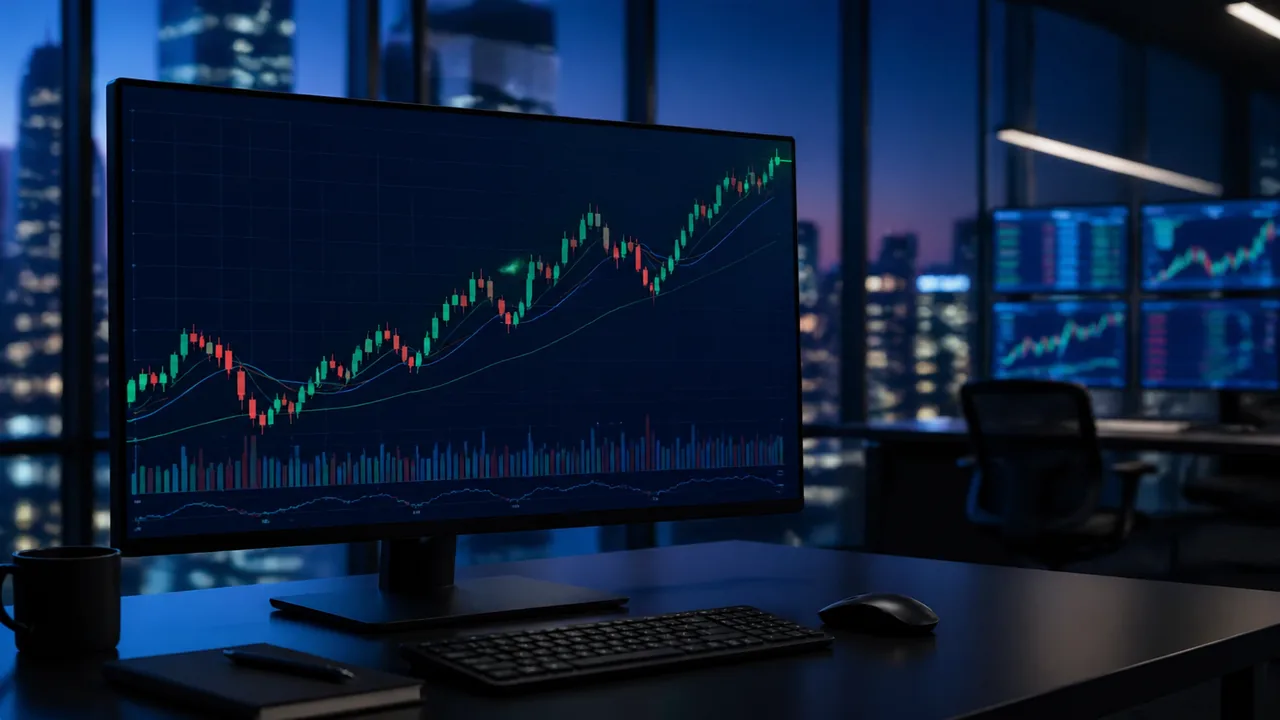
- Breakout trading with volume confirmation: After extended consolidation, breakouts above resistance or below support often precede significant moves. Entry rule: wait for a candle close above resistance on 1.5x+ average volume, not just an intrabar touch. False breakouts (price pierces resistance then reverses) are common without volume, volume confirmation dramatically improves signal reliability. Set stops at the breakout level; target the height of the prior range projected from the breakout point.
- Trend continuation via the 50/200 MA system: When BTC is above both the 50-day and 200-day moving averages (with 50 above 200, golden cross), pullbacks to the 50-day MA are high-probability long entries in confirmed uptrends. In downtrends (50 below 200, death cross), bounces to the 50-day MA are short entries. The system is simple; the discipline to follow it consistently through noise is the difficult part.
- On-chain signal trading: Exchange inflows spiking sharply (sudden large BTC transfers to exchanges) often precede sell-offs, miners or large holders moving to sell. Long-term holder coins beginning to move after 1+ year dormancy signals potential distribution. These signals have lead time advantage: on-chain data reflects actual behavior, not just price action. Glassnode alerts enable real-time monitoring of these signals without constant attention.
- Volatility event positioning: Scheduled catalysts (Fed rate decisions, ETF approval announcements, halving dates) create predictable volatility spikes. Options straddles (buying both a call and put at the same strike) profit from large moves in either direction. Alternatively, reduce position size before known binary events (where you can’t predict direction) and add size after the event resolves and direction is established.
What tools do serious crypto traders use in 2026?
- TradingView: Industry-standard charting platform. Multi-timeframe analysis, 100+ indicators, pine script for custom strategies, and community scripts. Price: free (limited features) to $60/month (professional). Essential for technical analysis, chart pattern identification, and setting price alerts. Integrates with most major CEXs for direct order execution.
- Glassnode: Leading on-chain analytics for Bitcoin and Ethereum. Tracks exchange flows, long-term holder behavior, MVRV Z-Score, SOPR, and dozens of other metrics that reveal what market participants are actually doing with their coins. Standard plan: $39/month. Indispensable for cycle-aware investing and identifying accumulation vs. distribution phases.
- Coinglass: Derivatives and liquidation data. Open interest by exchange, funding rates across perpetual markets, liquidation heat maps showing where stop clusters exist, and long/short ratios. Free tier covers most useful data. Essential for understanding futures market positioning, high OI with extreme funding rates signals crowded positions vulnerable to reversal.
- DeFiLlama: Free protocol analytics covering TVL across 3,000+ DeFi protocols and 100+ blockchains. Tracks TVL growth, revenue, and fee data by sector. Essential for DeFi research and understanding capital flows between protocols and chains. No subscription required.
- Nansen: Tracks “smart money” wallet activity, identifies wallets associated with sophisticated investors, funds, and early movers based on historical profitability. Nansen signals have identified early token accumulation by informed traders before public announcements. Price: $150+/month for meaningful functionality, more appropriate for professional traders managing larger capital.
How do you develop the psychological discipline needed for crypto trading?
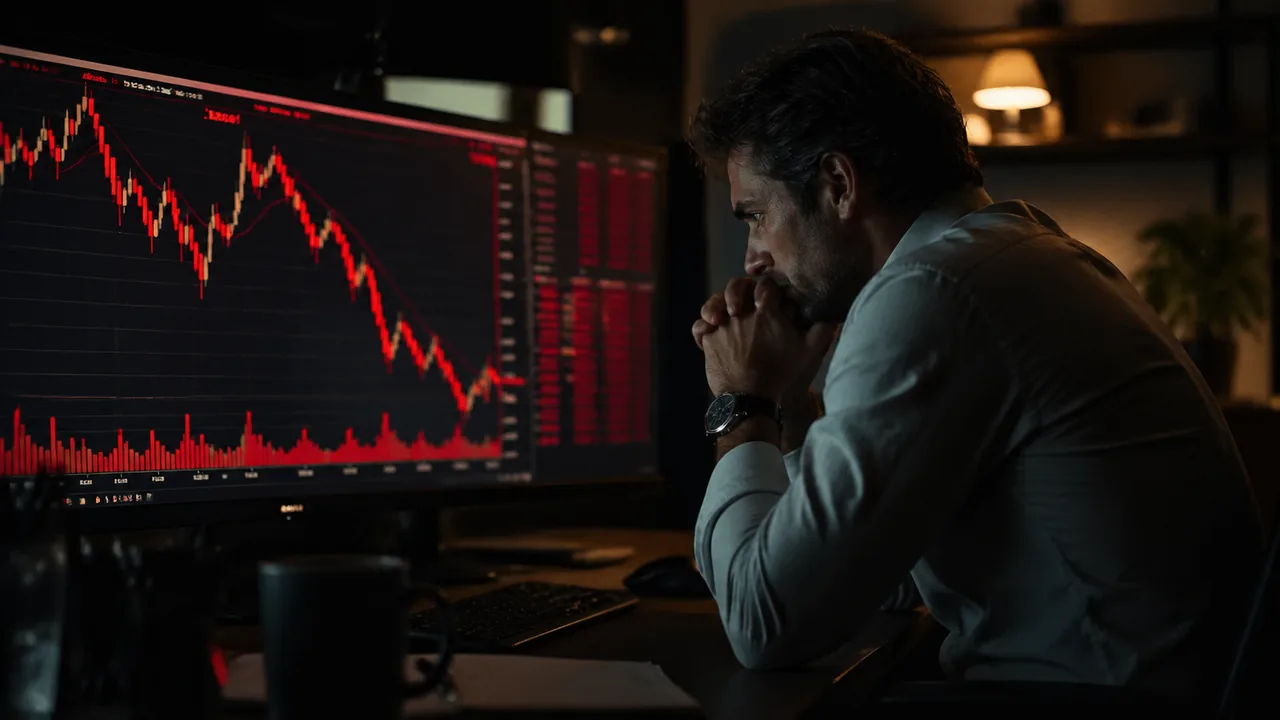
Technical strategy fails without psychological execution. The most consistent reason crypto traders underperform their own backtested approaches is behavioural, not analytical. FOMO causes traders to chase moves after 30–50% gains have already occurred. The entry point is the primary determinant of risk-reward — buying after a significant move shifts the ratio unfavourably. A practical rule: if the trade wasn’t on your radar before the move started, skipping it is the disciplined choice.
Revenge trading — increasing position size after a loss to recover quickly — is the leading cause of account blowups in crypto markets. A fixed rule that has measurable impact: after two consecutive losses in a single day, stop trading for 24 hours regardless of apparent opportunities. The market will be there tomorrow; a blown account will not recover easily.
Journal discipline compounds improvement over time. Recording every trade with entry rationale, exit rationale, and emotional state at entry reveals patterns invisible to memory. Most traders discover their worst trades share a common trigger — a particular time of day, market condition, or emotional state — once they review 50 or more logged trades. Risk limits of 1–2% of account per position mean no single trade can cause serious damage. This is not about being conservative — it is about staying in the game long enough to benefit from compounding.
Frequently Asked Questions
How do you trade crypto in a volatile market without getting wiped out?
Three principles preserve capital in volatile conditions: position sizing based on stop-loss distance (risk 1-2% of capital per trade maximum, if your stop is $3,000 away on BTC and your account is $20,000, position size is $200/$3,000 = 0.067 BTC), avoiding leverage on core holdings (spot positions can’t be liquidated; leveraged positions can be wiped out by normal volatility), and maintaining stablecoin reserves to buy dips without being forced to sell other positions. The traders who survive volatile markets aren’t those who call direction correctly every time, they’re those whose losses on wrong calls are small enough to survive until the winners come.
What is the best free crypto trading tool?
TradingView’s free tier provides professional-grade charting, standard indicators, and price alerts sufficient for most retail traders. Coinglass is free for core derivatives data (funding rates, liquidation maps, open interest). DeFiLlama is entirely free for DeFi protocol research. CoinMarketCap and CoinGecko provide free market data, token information, and basic portfolio tracking. For on-chain data, Glassnode’s free tier covers basic metrics; the paid tier ($39/month) is necessary for the most actionable signals. A trader combining TradingView free + Coinglass free + DeFiLlama has access to professional-grade multi-dimensional analysis at zero cost.
How do you build a crypto trading strategy from scratch?
Step 1: Choose one specific strategy type (trend following, breakout trading, range trading, DCA). Don’t combine multiple strategies before mastering one. Step 2: Define exact rules, specific entry signals, stop-loss placement, and take-profit levels. Vague rules (“buy when it looks good”) can’t be tested or followed consistently. Step 3: Backtest on historical data using TradingView’s strategy tester or manual chart review, identify whether the strategy had positive expectancy in past conditions. Step 4: Paper trade for 30-50 trades to validate execution without risking real capital. Step 5: Start with small real capital (10-20% of intended trading capital) to experience real psychology without catastrophic downside. Step 6: Track every trade in a journal; review patterns after 30+ trades. Most strategies fail in practice not because the concept is wrong but because execution discipline breaks down under real-capital psychological pressure.