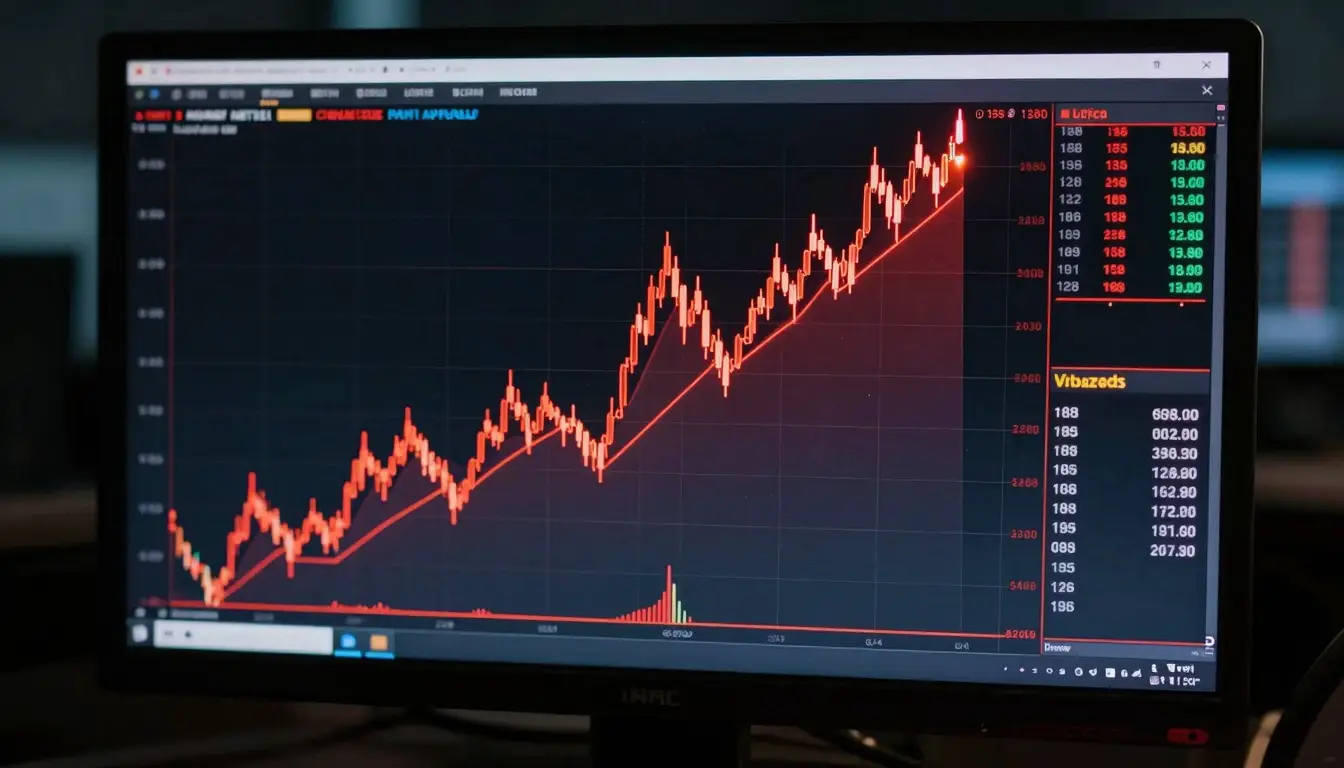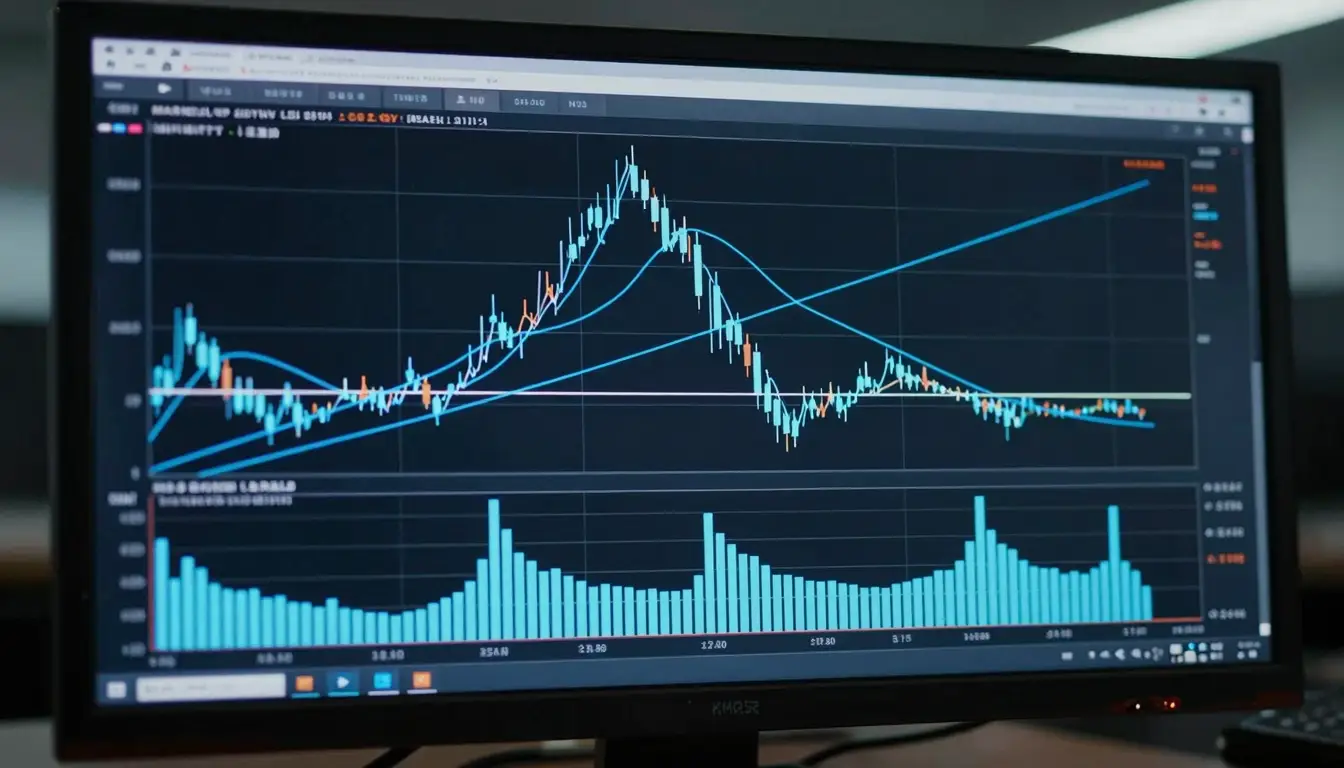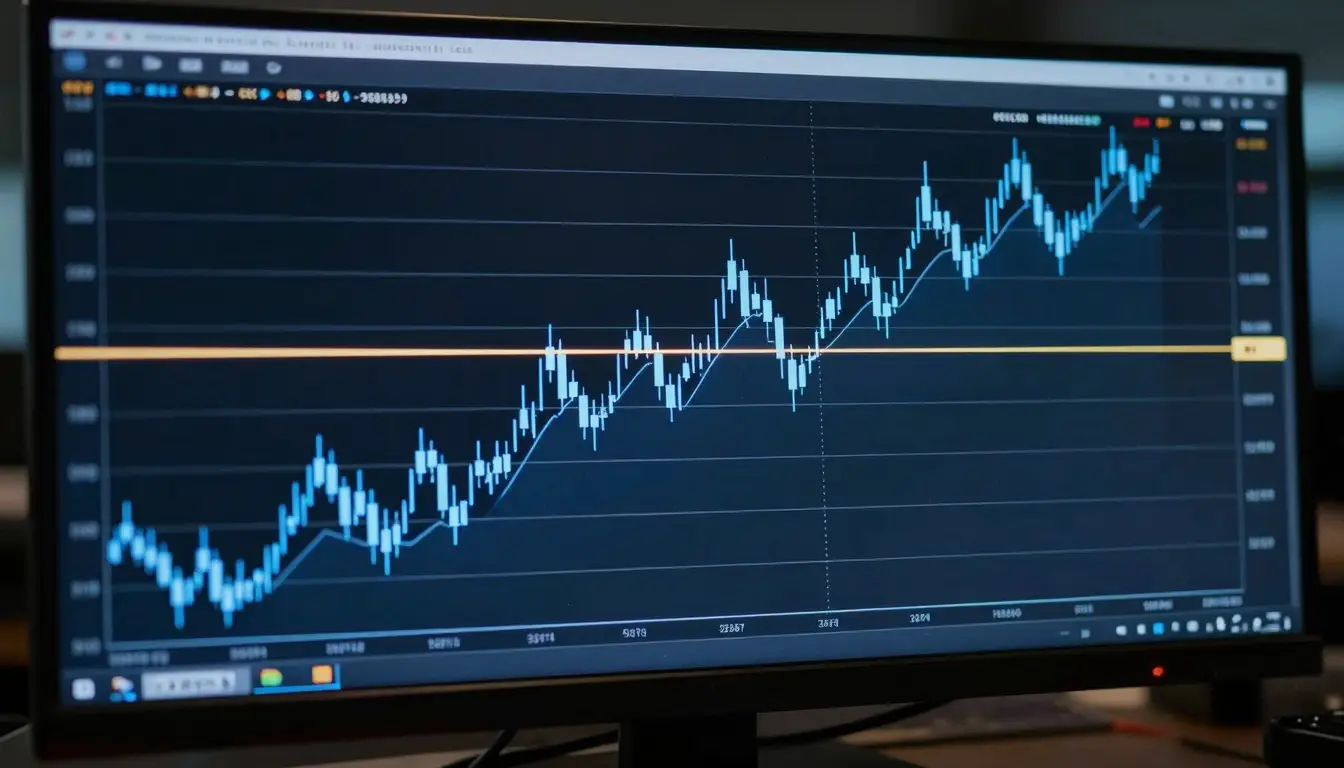
Technical analysis (TA) in crypto is the practice of evaluating price action and volume patterns to identify probable future price movements. It’s both a discipline and a shared language, enough traders reference the same indicators and levels that those levels become significant simply because participants act on them. Bitcoin’s 200-day moving average, key Fibonacci retracement levels, and major support/resistance zones attract orders from thousands of traders simultaneously, making these levels self-reinforcing. Understanding the core tools of crypto TA, trend analysis, support/resistance, and momentum indicators, builds the framework for reading price action rather than guessing at it.
How do you identify and trade crypto price trends?
- Moving averages: The 50-day and 200-day simple moving averages (SMAs) are the primary trend indicators in crypto. Price above the 200-day MA = long-term uptrend; below = long-term downtrend. The “golden cross” (50-day crosses above 200-day) signals bull confirmation; the “death cross” (50-day crosses below 200-day) signals bear confirmation. Bitcoin’s December 2022 golden cross preceded significant 2023 recovery; the 2021 death cross preceded continued downside.
- Higher highs and higher lows: The structural definition of an uptrend. Each swing high exceeds the prior high; each swing low exceeds the prior low. When a swing low fails to hold above the prior swing low, trend structure is broken. This simple observation eliminates much of the noise in trend identification, no need for complex indicators.
- Trendlines: Connect swing lows in uptrends, swing highs in downtrends. Three or more touches validate the trendline. Breaks of validated trendlines are significant, a 6-month uptrend trendline break after multiple touches historically signals more than a random price move.
- EMA ribbons: Exponential moving averages in clusters (e.g., 20, 50, 100, 200 EMA) create “ribbons”, when aligned in order (20 above 50 above 100 above 200), they signal strong trend. When they cross and entangle, they signal transition. Popular among technical analysts in crypto for identifying trend strength at a glance without needing to run complex indicator combinations.
How do support and resistance levels work in crypto?
- Psychological levels: Round numbers ($50,000, $100,000) attract orders, buyers place buy orders here, sellers place sell orders, stop-losses cluster near them. Bitcoin’s $100,000 level was psychologically significant for years before it was first crossed in November 2024. These levels become self-fulfilling because enough participants reference them.
- Previous highs and lows: Former resistance often becomes support after being broken (and vice versa). Bitcoin’s 2017 all-time high of $20,000 acted as strong support in 2020-2021 after being exceeded. This “resistance becomes support” dynamic is one of the most reliable phenomena in crypto TA.
- Fibonacci retracement levels: Derived from the Fibonacci sequence, the key retracement levels (23.6%, 38.2%, 50%, 61.8%) mark common pullback depths during trends. The 61.8% (“golden ratio”) retracement is particularly watched, Bitcoin has repeatedly found support near 61.8% retracements of major moves during bull market corrections.
- Volume at price (VPVR): Volume Profile Visible Range shows where most trading volume has occurred historically. High-volume price nodes are strong support/resistance zones, price tends to react when revisiting these levels. Low-volume nodes are “thin” zones where price can move quickly. Many technical traders treat VPVR as a more objective alternative to hand-drawn support levels because it is derived directly from market activity.
What are the limitations of technical analysis in crypto?
- Pattern failure is common: No TA pattern has a 100% success rate. Head and shoulders fails 30-40% of the time. Treating patterns as probabilistic setups (not certainties) is the professional approach, position sizing and stop-losses matter more than pattern selection.
- Fundamental events override TA: Regulatory actions, exchange collapses, protocol exploits, and macro events can invalidate any technical setup instantly. Bitcoin’s March 2020 COVID crash broke every technical level that should have been support.
- Thin altcoin markets: TA is most reliable in liquid markets with genuine price discovery. Low-cap altcoins with minimal trading volume have prices that can be moved by single actors, TA patterns in thin markets can be manufactured rather than organic.
- Self-fulfilling decay: As more traders use the same technical strategies, institutions and sophisticated actors can anticipate retail positions and exploit them. Stop-hunting (deliberately moving price to trigger retail stops before reversing) occurs because stop placement is predictable when everyone references the same technical levels.
Frequently Asked Questions
Does technical analysis actually work in crypto?
TA works in crypto as a probabilistic framework with meaningful but imperfect predictive power. Academic research shows that certain TA patterns (momentum, trend-following, moving average crossovers) have statistically significant predictive value in crypto markets, better than random. The “works” qualifier matters: TA doesn’t work as a precise prediction tool; it works as a framework for defining high-probability setups with clear entry, stop, and target parameters. Combined with risk management (stops, position sizing), TA converts market structure into actionable trades. Without risk management, even accurate TA signals produce net losses due to the inevitable losing trades.
What timeframe is best for crypto technical analysis?
Longer timeframes are more reliable than shorter ones, daily and weekly charts produce more significant support/resistance levels and pattern formations than 5-minute charts where noise dominates. Most crypto traders use a “multiple timeframe” approach: identify trend on weekly chart (macro direction), confirm setup on daily chart (entry context), time entry on 4-hour or 1-hour chart (precise execution). Scalpers using 1-minute and 5-minute charts face the most noise and the highest false-signal rate, requiring much higher win rates to be profitable given transaction costs.
What is the 200-day moving average and why is it important for Bitcoin?
The 200-day simple moving average is the average closing price over the last 200 trading days, a long-term trend indicator. Its importance in crypto comes from wide adoption: institutional traders, hedge funds, and retail technical analysts all reference it, making it a significant order-attracting level. Bitcoin above the 200-day MA has historically meant bull market conditions; below has meant bear market conditions. The “Bitcoin Bull Market Support Band” (combination of 20-week SMA and 21-week EMA) is a similar long-term support indicator that has reliably held as support during bull markets and flipped to resistance during bears.